
Dice Art vs Pixel Art: What's the Difference?
At first glance, pixel art and dice art look strikingly similar. Both transform images into grid-based compositions built from small, repeating units. But look closer, and you'll find two art forms with entirely different philosophies — one rooted in the digital realm, the other in the physical world. Whether you're a creative enthusiast, searching for a meaningful gift, or just curious about these fascinating mediums, this guide breaks down exactly what sets them apart.
What Is Pixel Art?
Pixel art is a digital art form born from the constraints of early computing. In the 1980s, game developers worked with severely limited screen resolutions and needed ways to render recognizable characters and environments using just a handful of colored squares. Games like Super Mario Bros. and The Legend of Zelda turned this technical limitation into a visual identity — and pixel art became iconic.
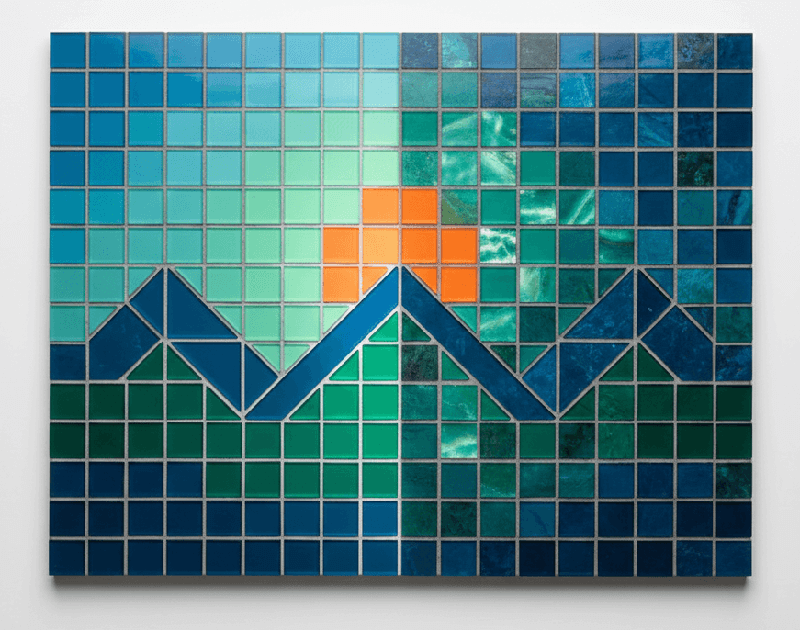
Today, pixel art thrives as a deliberate aesthetic choice in game design, digital illustration, and internet culture. Artists create images by placing individual colored squares (pixels) on a digital canvas, with each pixel representing a single point of color. Dedicated pixel art generators have made the style even more accessible, allowing anyone to convert a photo or idea into a pixel-based composition instantly.
What pixel art does well:
- Works with thousands — or even millions — of colors
- Scales and reproduces infinitely as a digital file
- Fast to create with software tools and pixel art generators
- Ideal for game assets, icons, sprites, and any digital deliverable
Where pixel art falls short:
- Exists only on a screen — it cannot be touched, framed as a physical object, or handed to someone as a crafted piece
- Lacks the warmth and uniqueness of something made by hand
What Is Dice Art?
Dice art — also known as a dice mosaic or custom dice portrait — is an art form that uses physical dice as its building blocks. Each standard die has six faces numbered 1 through 6 (with a blank face representing 0). By arranging dice with specific faces pointing upward, you create an image where the density of dots maps to varying shades of light and dark across the composition.
Unlike pixel art's virtually unlimited color palette, dice art works within a unique constraint: just seven tonal values (faces 0–6) to represent an entire image. Far from being a weakness, this restriction is precisely what gives dice art its distinctive character — it transforms mechanical precision into something organic, tactile, and deeply human.
What dice art does well:
- Creates a physical object with real presence, real shadows, and real texture
- Produces something genuinely collectible and displayable
- The seven-value constraint generates a striking aesthetic reminiscent of classic black-and-white photography
- Every finished piece is one-of-a-kind — lighting and assembly variations ensure no two look exactly alike
Where dice art has limits:
- Narrower tonal range than digital media
- Physical assembly requires time, materials, and patience (though modern dice art generators handle the design work automatically)
Key Differences Between Dice Art and Pixel Art
Material and Medium
Pixel art exists purely as data — light on a screen. Dice art, even when designed digitally, ultimately aims to become a physical object. A real dice mosaic takes up space, catches light from the room, and can be touched. Unlike the output of a pixel art generator (which lives as a file on your device), a physical dice portrait is an artifact you can hold.
Color and Tonal Range
Pixel art can theoretically work with millions of colors, though artists often choose restricted palettes for stylistic reasons. Dice art is inherently grayscale in its standard form — each die contributes one of seven tonal values. Some artists use colored dice to expand the range, but the core aesthetic is always shaped by that constraint.
Creation Process
With pixel art, you paint on a digital canvas using software — placing or generating colored squares at the individual pixel level. A pixel art generator automates this entirely: upload an image, choose a grid resolution, and the tool converts it in seconds.
Dice art follows a similar digital workflow at the design stage: upload a photo, and a dice art generator analyzes the image, assigns each region a die face value (0–6), and produces a printable blueprint for physical assembly. The difference is what comes next — assembling hundreds or thousands of real dice into a finished mosaic is a labor of love that no software can replicate.
Visual Texture and Aesthetic
Pixel art carries a clean, geometric, intentionally digital feel. Its associations with early computing and retro gaming make it perfect for nostalgic projects, game graphics, and modern flat design.
Dice art has an organic, tactile quality that digital work simply cannot match. The slight variations in how each die catches light, the subtle physical depth of assembled pieces, the imperfect regularity of hand-placed dots — these elements create visual richness that grows more interesting the closer you look. A dice mosaic feels warm, personal, and genuinely made.
Scale and Permanence
A pixel art file exists as long as the data survives and can be reproduced in seconds. A physical dice mosaic is a permanent object. A large piece might incorporate thousands of dice and become a statement work of art — one that could realistically be passed down through generations.
Practical Applications
When Pixel Art Makes Sense
Pixel art generators and digital tools are the right choice when:
- You're creating game assets, character sprites, or UI elements
- Your deliverable is digital — icons, wallpapers, or social media graphics
- You need fast iteration, infinite scalability, or a wide color range
- The end result lives on a screen
When Dice Art Makes Sense
Dice art excels in physical, meaningful contexts:
- Gifts: A custom dice portrait is a deeply personal gift for birthdays, anniversaries, weddings, or milestones — far more memorable than anything mass-produced
- Home décor: Framed dice mosaics make striking wall art with a conversation-starting texture that invites people to look closer
- Education: Dice art is a surprisingly effective hands-on activity for classrooms — it introduces grid logic, grayscale mapping, and pixel thinking in a tangible, engaging way
- Commemorative pieces: Turning a cherished photograph into a dice mosaic creates a lasting, one-of-a-kind memento that digital prints simply cannot replicate
Why Choose Dice Art?
In a world saturated with digital images, something physical and handcrafted carries a different kind of weight. Here's why dice art is gaining traction:
- Tactile appeal — You can hold it, frame it, and display it on a wall. It exists in the world, not just on a screen.
- Genuine uniqueness — Even two mosaics assembled from the same photo will look different under different lighting. No two are truly identical.
- Meaningful gifting — A custom dice portrait requires thought, personalization, and craft. Generic gifts simply cannot compete.
- Conversation starter — Guests inevitably stop and ask: "Wait — is that actually made of dice?" That reaction never gets old.
The best part? You don't need to own a single die to get started. Modern dice art generators let you upload any photo, preview the mosaic in real time, and download a printable blueprint ready for physical assembly.